
Buying a diesel generator that is too small means tripped breakers and stalled motors. Buying one that is far too big wastes money on the machine, the fuel and the maintenance. This guide explains, in plain terms, how to work out what size diesel generator you need – for a home, a workshop, a farm, a construction site or a factory – and which kVA range fits each job.
kVA vs kW: what the numbers on a generator mean
Generators are usually sold in kVA (kilovolt-amperes), but most of your equipment is rated in kW (kilowatts). kVA is the apparent power the generator can deliver; kW is the real power your equipment actually uses. The link between them is the power factor, which for standard three-phase diesel generator sets is 0.8.
kW = kVA × 0.8 and kVA = kW ÷ 0.8
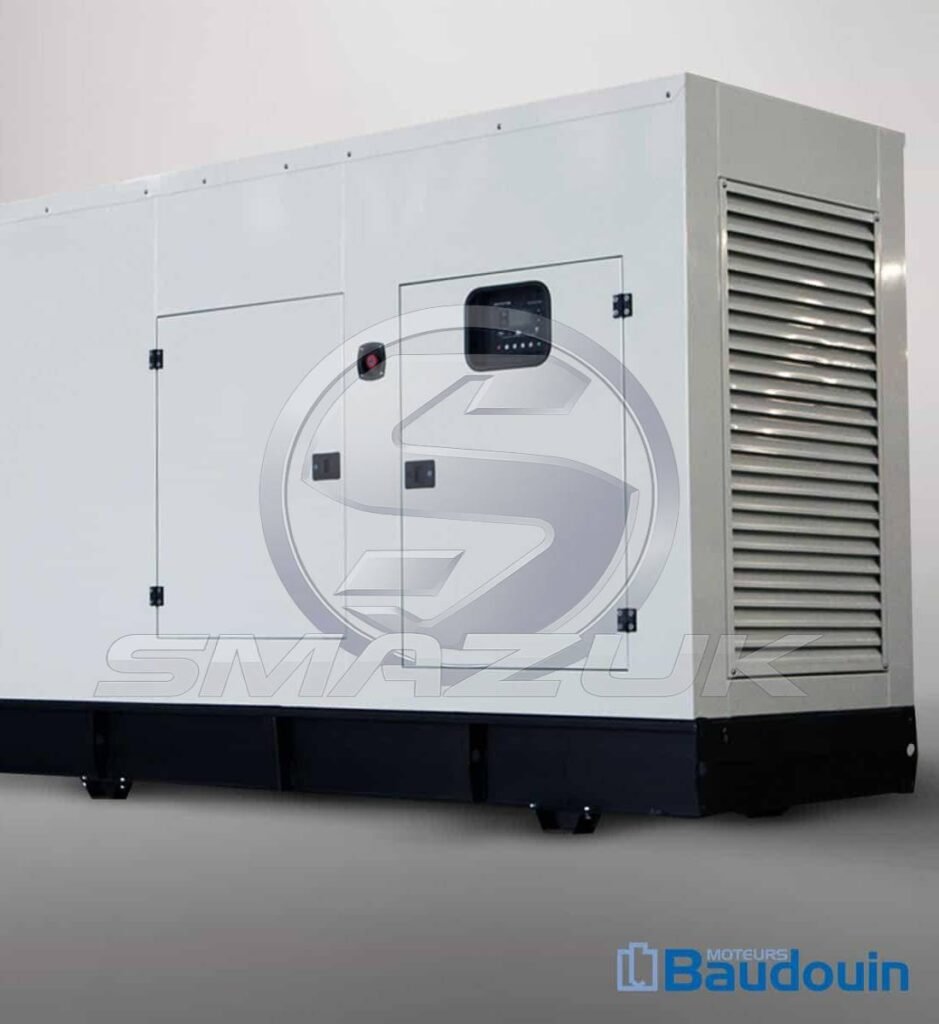
So a 100 kVA generator delivers about 80 kW of usable power, and a 50 kVA set delivers about 40 kW. You can see this on our Baudouin EB100 (80 kW / 100 kVA) and Baudouin EB200 (160 kW / 200 kVA) listings.
How to size a diesel generator in 5 steps
1. List everything the generator must power
Write down every machine, light, pump, compressor, heater and computer that will run on the generator. Decide whether you need to power the whole site or only critical loads (for example lighting, refrigeration and IT during a mains failure).
2. Find the running power of each item
Check the rating plate or manual for the power in watts or kW. If only amps are shown, use: single phase kW = volts × amps ÷ 1000 (230 V in the UK), or three phase kW = 1.732 × volts × amps × 0.8 ÷ 1000 (400 V in the UK).
3. Allow for starting (surge) power
Electric motors – in pumps, compressors, air conditioners, lifts, welders and mixers – draw several times their running current for a few seconds when they start, commonly 3 to 6 times with direct-on-line starting. The generator must cover the largest motor starting while everything else is already running. Soft starters and variable speed drives reduce this surge and can let you choose a smaller generator.
4. Add up the total and convert to kVA
Total kW = all running loads + the extra starting power of the biggest motor. Then divide by 0.8 to get kVA.
5. Add a safety margin of 20–25%
A diesel generator lasts longest and runs most efficiently at roughly 70–80% of its rated output. Adding 20–25% on top of your calculated load also leaves room for future equipment.
Worked example: a small workshop
- Lighting and sockets: 6 kW
- Air compressor (7.5 kW motor): 7.5 kW running
- Lathe and drill press: 5 kW
- Office and IT: 1.5 kW
Running load = 20 kW. The compressor starting at around 3× its running power adds roughly 15 kW for a few seconds, giving a peak of about 35 kW. 35 ÷ 0.8 = 44 kVA, plus a 20% margin ≈ 53 kVA. A Perkins 50 kVA would be on the limit, so a Perkins 66 kVA or Baudouin EB65 (65 kVA) is the safer choice.
Generator size chart: which kVA for which job?
These are typical starting points only – always confirm with your own load calculation.
| Typical use | Approx. size | Example models |
|---|---|---|
| Large house, small shop, farm building, small site cabin | 15–33 kVA | Perkins 15 kVA, Perkins 22 kVA, Baudouin EB30, Perkins 33 kVA |
| Workshop, small farm with pumps, small construction site | 50–110 kVA | Perkins 50 kVA, Perkins 88 kVA, Baudouin EB100, Perkins 110 kVA |
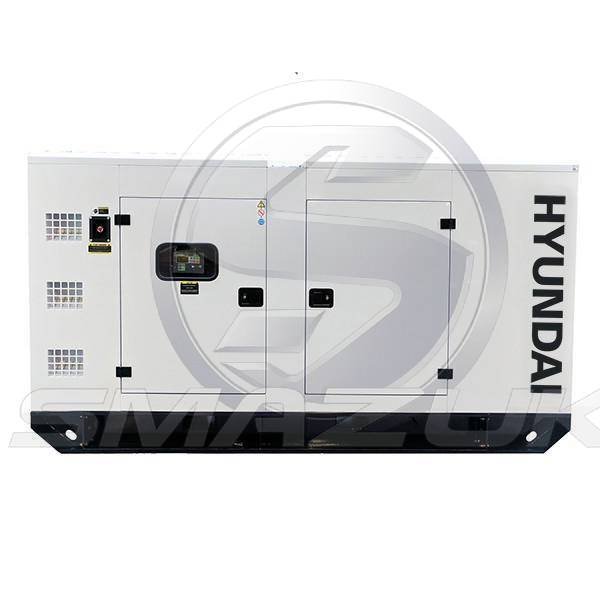
| Office building, hotel, cold store, medium site with tower crane | 125–250 kVA | Hyundai 125 kVA, Perkins 150 kVA, Perkins 165 kVA, Baudouin EB200, Hyundai 250 kVA |
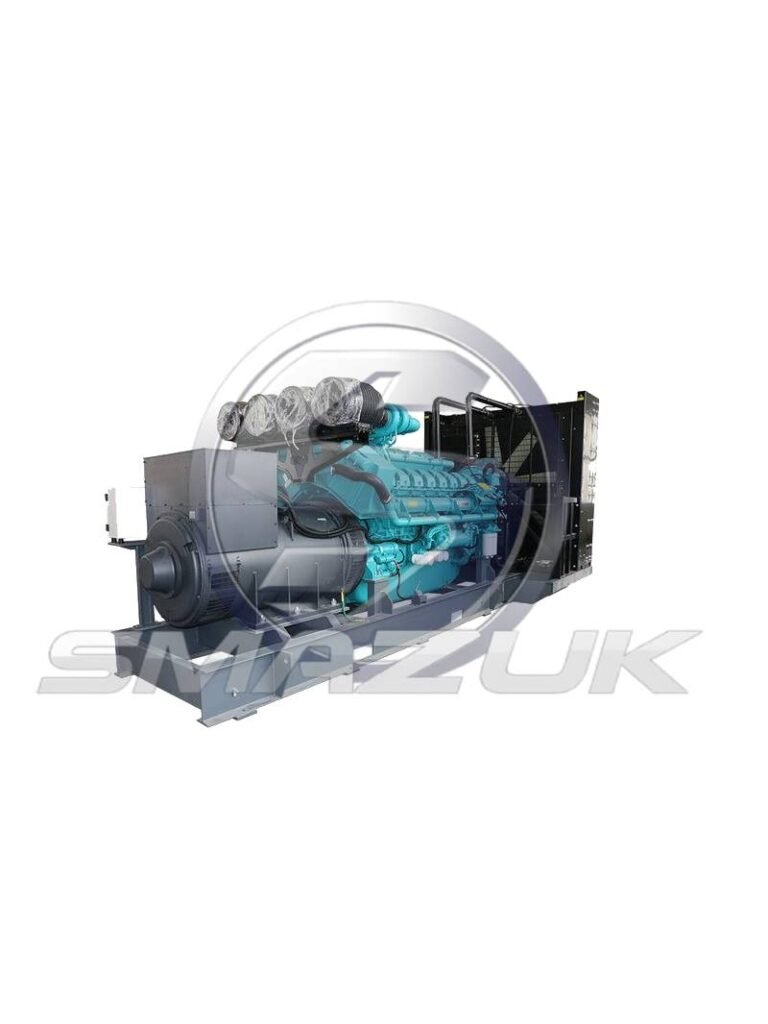
| Factory, hospital or large commercial standby | 350–1000 kVA | Perkins 350 kVA, Hyundai 500 kVA, Perkins 800–1000 kVA |
| Data centres, large industrial plants, mines | 1250–2500 kVA | Perkins 1250–1500 kVA, Perkins 1800–2500 kVA |
Standby vs prime power rating
Generators often show two ratings. Standby is the maximum output for emergency use when the mains fails, for limited hours per year. Prime is the output the set can deliver continuously with a variable load, for example on a remote site with no grid. The prime rating is lower, so if the generator will be your main power source, size it on the prime figure.
Single phase or three phase?
Most UK homes use single-phase 230 V. Workshops, farms, factories and construction sites usually need three-phase 400 V for larger motors. Most diesel generators above about 20 kVA are three-phase. On a three-phase set, spread single-phase loads evenly across the three phases so no single phase is overloaded.
Common sizing mistakes to avoid
- Ignoring motor starting current – the most common reason a generator trips.
- Confusing kVA and kW – a 100 kVA set is not 100 kW.
- Oversizing too much – running a diesel engine at very light load for long periods can cause “wet stacking” (unburnt fuel and carbon build-up). Aim to keep the load above roughly 30–40%.
- Forgetting future growth – leave headroom for new machines.
- Skipping site conditions – high altitude and high temperatures reduce output, so check the manufacturer’s derating data.
Frequently asked questions
What size generator do I need to run a house?
For essential circuits in a typical home, a small set is usually enough. To run a large house including electric heating, showers or a heat pump, a 15–22 kVA generator is a common choice – but calculate your own load first.
How many kW is a 100 kVA generator?
About 80 kW, using the standard 0.8 power factor (100 × 0.8 = 80).
Is a bigger generator always better?
No. A generator that is much too large costs more to buy and run, and running it at very low load can damage the engine over time. Size it for your load plus 20–25%.
Get help choosing the right generator
SMAZ Agri International UK supplies three-phase diesel generators from 15 kVA to 2500 kVA, including Perkins, Baudouin and Hyundai sets. Browse the full diesel generator range, read our FAQ or learn more about us. If you are not sure which size you need, send us an enquiry with a list of your equipment and our team will help you choose.
Related guide: once your generator is installed, keep it reliable with our diesel generator maintenance checklist.